
On this page
- Key Takeaways
- What Is a Motion Sensor Night Light?
- How Do You Choose a Motion Sensor Night Light for Bathroom Use?
- How Far Can a Motion Sensor Night Light Detect Movement?
- Warm or Cool Light: Which Is Better at Night?
- Where Should You Place a Motion Sensor Night Light in a Bathroom?
- What Happens During a Power Cut?
- When a Motion Sensor Night Light Is the Wrong Choice
- Frequently Asked Questions
- Conclusion
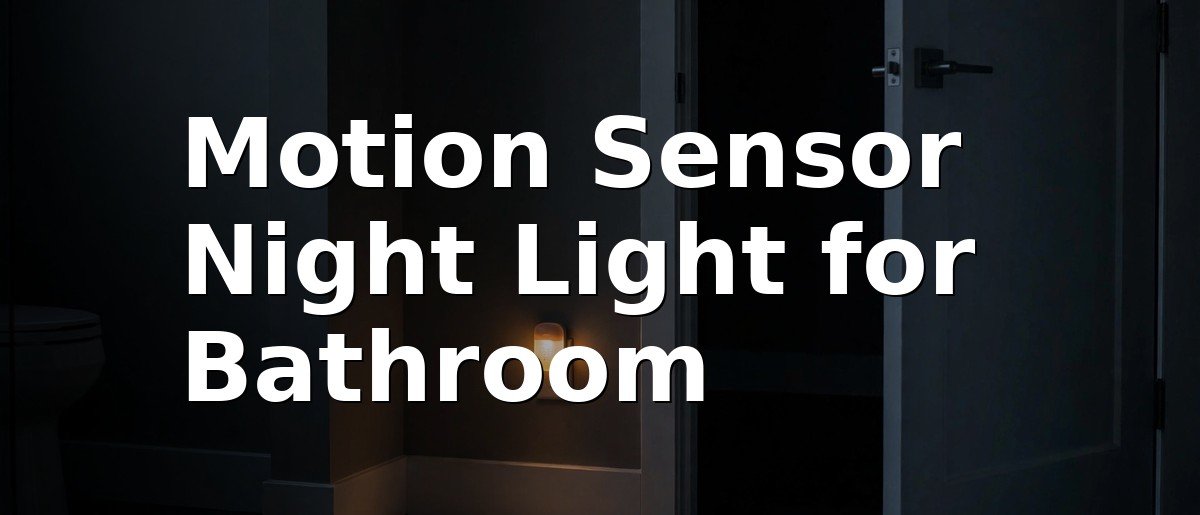
A motion sensor night light for bathroom use switches on when you step in at night and off after you leave, so you never fumble for a switch in the dark. My Homesblogs recommends a warm, low-mounted light by the door, with a battery or rechargeable backup for power cuts.
Key Takeaways
- It switches on only when it senses movement in the dark, then off again after a short delay.
- Warm light at 2700K or lower disturbs sleep far less than cool white light.
- Plug-in models suit a socket by the door; rechargeable models suit rentals and power cuts.
- Mount the bathroom night light low, near the floor, so the glow marks the path without shining in your eyes.
- Keep any mains-powered light away from shower spray and out of the wet zone.
What Is a Motion Sensor Night Light?
A motion sensor night light is a small LED light with a passive infrared sensor and a dusk sensor built in. The infrared sensor watches for body heat moving across its field, and the dusk sensor keeps the light off while the room is bright, so it switches on only when a person moves in darkness.
How Do You Choose a Motion Sensor Night Light for Bathroom Use?
Four types cover nearly every bathroom; the right one depends on your sockets and how often the power goes out.
Plug-in
A plug-in light pushes straight into a 230V socket, so it never needs charging or new batteries and costs the least to run. It only works where a socket sits at the right height and place, and a bathroom socket near the basin is often too high or too close to water for a night light.
Battery
A battery light runs on AA or AAA cells and sticks to a wall or shelf with adhesive or screws, so it goes anywhere, including a rented bathroom where drilling is banned. Keep a spare set of cells in the cabinet.
Rechargeable USB
A rechargeable light carries a built-in lithium battery, charges over USB-C, and mounts anywhere with a magnet or adhesive strip. According to a 2026 comparison by ZSYZDL, a 1500 mAh rechargeable motion light runs up to 120 days on one charge in AUTO mode. That works out to about three charges a year in a bathroom used a few times each night.
Stick-on
A stick-on light is a battery or rechargeable light with an adhesive back, made to sit under a vanity or along a skirting board, where it lights the floor line. Check the adhesive after the first monsoon week, because steam loosens cheap foam tape.
| Type | Power source | Sensor range | Typical price | Source |
|---|---|---|---|---|
| Plug-in motion bulb | Mains 230V | 6 m | ₹250 | Philips India store |
| Motion tubelight | Mains 230V | 5 m | ₹675 | Philips India store |
| Battery stick-on light | AAA batteries | 120°, 2–4 m | — | Boat Hardware |
| Rechargeable USB light | USB-C rechargeable | — | — | ZSYZDL comparison |
How Far Can a Motion Sensor Night Light Detect Movement?
Most bathroom sensor lights watch a wide cone and pick up movement several metres away, so a bathroom night light by the door covers a small bathroom end to end. Aim the sensor across the doorway, so it catches you as you step in. Mount it 30 to 60 cm above the floor: low enough to light the path, high enough to stay clear of splashes and mopping water. A sensor pointed at the shower fires on steam, so angle it toward the door and the vanity instead.
Warm or Cool Light: Which Is Better at Night?
Warm light wins for night trips. Bulbs marked 2700K or lower give a soft amber glow; cool white at 4000K and above looks bluish and wakes the brain. A 2026 study in Scientific Reports measured melatonin suppression at 12.3% under cool white LED light against 3.6% under warm white light. That gap is the reason to pick warm: the same dim glow disturbs sleep far less. Check the Kelvin number on the box, and skip any light marked "daylight" or 5000K and above.
Where Should You Place a Motion Sensor Night Light in a Bathroom?
Place one light by the door at ankle height, and a second under the vanity in a longer bathroom. The homesblogs rule for night lighting is simple: light the floor, not the ceiling. Measure the floor before you shop. A 2.4 m by 1.8 m bathroom covers about 4.3 square metres, and the same measure-first habit a Square Feet to Cubic Yards calculator applies to yard figures keeps the maths honest when a listing quotes area in square feet. Keep every mains-powered light out of the shower zone and an arm's length from the basin tap, where spray reaches. For a plug-in model, choose a socket on the dry wall by the door, never above the basin. Check the BIS mark on the box before you buy. The Bureau of Indian Standards revised its LED lamp safety standard, IS 16102-1, in February 2026, and the new edition covers rechargeable-battery lamps for the first time, with the transition running to 2 February 2027. A BIS-marked light has passed India's mandatory safety tests for LED lamps.
- Wipe the spot clean and dry so adhesive or screws hold.
- For a plug-in light, push it into the socket and turn the sensor toward the doorway.
- For a stick-on light, press the adhesive strip firmly for 30 seconds.
- Walk past it in the dark and check it fires before you reach the toilet.
- Adjust the angle until it catches the doorway and ignores the shower.
What Happens During a Power Cut?
A plug-in light dies with the mains, while a battery or rechargeable light keeps working. That gap matters in India: the India Residential Energy Survey found the average Indian household receives 20.6 hours of grid supply a day, and 76% of households faced unanticipated supply interruptions. A rechargeable light charged that morning still guides the 2 a.m. trip. Keep one rechargeable unit charged as the backup even if your main night light is plug-in, and charge it on a fixed day each month. During a long cut, switch it to its lowest brightness to stretch the battery.
When a Motion Sensor Night Light Is the Wrong Choice
Steam is the main exception: in a small bathroom with no exhaust fan, a sensor aimed at the shower fires every time hot water runs. Where the door stays open to a lit corridor, the dusk sensor reads the corridor light and never switches on. A cat roaming at night triggers it too. In each case, aim the sensor lower and narrower, or pick a model with a sensitivity control. If the only socket sits inside the shower zone, skip the plug-in type and use a rechargeable one on the dry wall.
Frequently Asked Questions
Do motion sensor night lights work in a steamy bathroom?
Yes, if the sensor faces the door instead of the shower. Steam trips a sensor aimed at the shower, so angle it toward the doorway and mount it low, where steam thins out.
How long does a rechargeable motion sensor night light last?
Several months on one charge in AUTO mode. That covers about three charges a year, and a full charge takes a couple of hours over USB-C.
Where is the best place to put a night light in a bathroom?
Low, by the door, on the dry wall. A light 30 to 60 cm above the floor marks the path to the toilet without shining into sleepy eyes, and a second unit under the vanity covers longer bathrooms.
Is warm or cool light better for a bathroom at night?
Warm light at 2700K or lower is better at night. It disturbs melatonin far less than cool white light, so you fall back asleep faster after a night trip to the bathroom.
Can I leave a motion sensor night light on all night?
No, and you do not need to. The sensor switches the light on only when it detects movement in the dark, then off again after a short delay, so it rests between trips.
Do motion sensor night lights work during a power cut?
Battery and rechargeable models keep working through a cut, while plug-in models stop with the mains. Keep one rechargeable unit charged as a backup if cuts are common in your area.
Conclusion
A motion sensor night light for bathroom trips is the cheapest comfort upgrade in a small bathroom: pick a warm plug-in by the door, add a rechargeable one under the vanity, and the 2 a.m. walk stays dark, quiet and safe. Measure the floor, aim the sensor at the doorway, and charge the backup on a fixed day each month.


Leave a Reply