
On this page
- Key Takeaways
- What Supplies Do You Need to Deep Clean a Bathroom?
- How to Deep Clean a Bathroom Step by Step Checklist in 90 Minutes?
- Which Cleaner Goes on Which Surface?
- How Do You Disinfect the Touch Points?
- What Safety Rules Keep a Deep Clean Safe?
- When a Deep Clean Is Not Enough
- Frequently Asked Questions
- Conclusion
- Sources
Last updated: October 26, 2026
This My Homesblogs checklist for how to deep clean a bathroom step by step checklist takes a standard bathroom from dusty to disinfected in about 90 minutes. Clear and dust first, spray and let cleaners dwell, scrub top to bottom, disinfect touch points, and mop the floor last.
Key Takeaways
- A deep clean follows one order: clear, dust dry, spray and dwell, scrub top to bottom, disinfect, and mop last.
- Vinegar suits ceramic, porcelain, and glass, and stays off marble, limestone, and travertine.
- Disinfectant only works when the surface stays wet for the label’s full contact time.
- Bleach never shares a surface or a bucket with vinegar, ammonia, or another cleaner.
- A deep clean fixes dirt and surface mold, not leaks, failed caulk, or mold inside walls.
What Supplies Do You Need to Deep Clean a Bathroom?
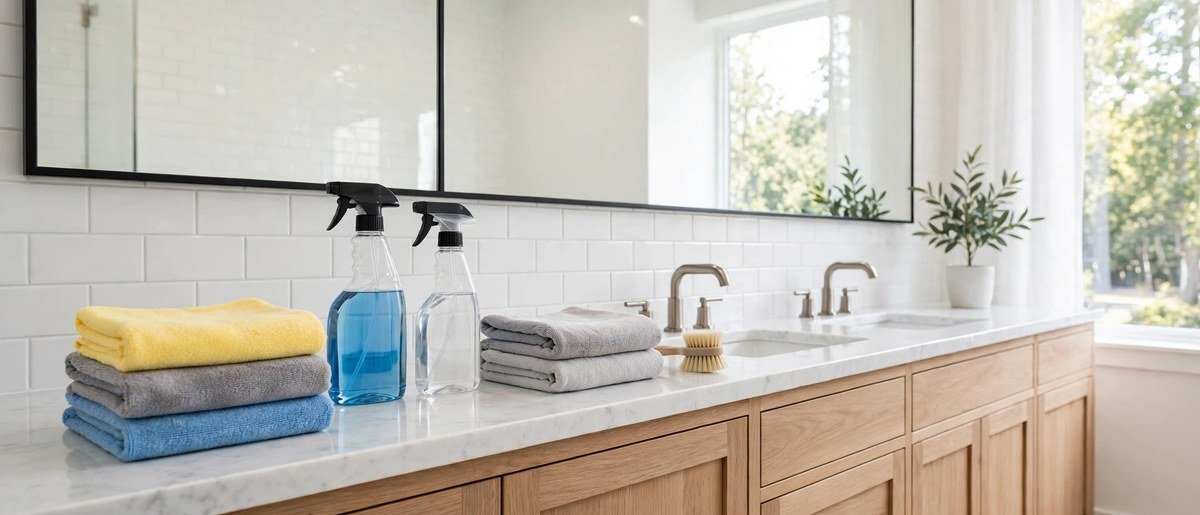
Gather your bathroom deep cleaning supplies before the first spray: hunting for a brush with wet gloves wastes cleaner dwell time.
- Rubber gloves, 1 pair, plus eye protection for bleach sprays
- Microfiber cloths, 4 to 5: dusting, damp wiping, dry buffing, and one for the toilet only
- A stiff grout brush and an old toothbrush for tracks, bolts, and faucet bases
- All-purpose bathroom cleaner, toilet bowl cleaner, and an EPA-registered disinfectant
- Baking soda, 1 cup, and white vinegar, 1 cup, for ceramic and porcelain only
- Glass cleaner or a vinegar-water mix for mirrors
- Mop, bucket, trash bag, and a squeegee for glass doors
One disinfectant beats three half-used bottles: read its label before you start, since the contact time on the back decides whether the job disinfects or only wipes.
How to Deep Clean a Bathroom Step by Step Checklist in 90 Minutes?
Work dry before wet and high before low, so dust and drips fall on zones you still plan to clean.
- Clear and dust (10 minutes): empty the trash, clear counters and the tub edge, and dust the exhaust fan cover, light fixtures, and shelves.
- Spray and dwell (10 minutes): spray the shower walls, tub, and toilet bowl and leave them wet; while they dwell, lay out fresh towels and a bag for used cloths.
- Scrub the shower and tub (25 minutes): scrub tile, the tub floor, and glass doors; clean bathroom grout lines with the stiff brush; for showerhead descaling, soak the head in vinegar if it unscrews; wipe door tracks.
- Clean the toilet inside and out (15 minutes): scrub under the rim and the bowl, wipe the tank, seat top and bottom, hinges, and base, and clean the floor-bolt caps and the grime behind the base.
- Clean the vanity and mirror (15 minutes): wipe the counter, sink, faucet, and handles; clean the mirror; wipe cabinet fronts and the tub overflow drain plate.
- Disinfect touch points (5 minutes plus dwell): wipe door handles, light switches, flush buttons, faucet handles, and towel bars with disinfectant and keep them wet for the label time.
- Sweep and mop last (10 minutes): sweep corners and behind the toilet, mop from the far corner toward the door, and let the floor dry before replacing rugs.
The spots that separate a deep clean from a quick wipe: the tub overflow drain plate, the toilet floor-bolt caps, the exhaust fan cover, the shower door tracks, and the grout lines at the floor edges. For more bathroom checklists, browse homesblogs before your next deep clean. If the clean turns up a swollen vanity panel that needs a new wooden board, run the board dimensions through a BD FT Calculator before buying lumber so you pay for the wood you need and nothing more.
Key figures at a glance:
| Detail | Figure | Source |
|---|---|---|
| Lysol multi-purpose cleaner, label contact time | 2 minutes | Lysol EPA-registered label (2026) |
| Diluted bleach, usable life after mixing | 24 hours, then mix fresh | CDC |
| Indoor humidity target | Below 60%, ideally 30-50% | EPA |
| Professional deep clean, standard bathroom | 35-55 minutes | CleanKit HQ professional checklist |
| Fiberglass tub lifespan vs acrylic | Up to 15 years vs up to 30 years | Angi |
Which Cleaner Goes on Which Surface?
Match the cleaner to the material, because the wrong product damages the surface it was meant to save.
Vinegar is a dilute acetic acid, and the University of Florida IFAS Extension notes that this acid breaks down calcium carbonate, the mineral in marble, limestone, and travertine. So vinegar cleans ceramic tile, porcelain, and glass well, and stays off stone counters, stone floors, and unsealed grout, which get a pH-neutral stone cleaner instead. Acrylic and fiberglass tubs get a non-abrasive cleaner and a soft sponge, since scouring pads scratch the finish and trap dirt in the scratches.
How Do You Disinfect the Touch Points?
Cleaning and disinfecting are two separate jobs, and the second only works on a surface the first already cleared.
According to the CDC’s 2024 bleach guidance, a home disinfecting mix uses 5 tablespoons of regular unscented bleach per gallon of room-temperature water. Measure it instead of pouring freehand: a stronger mix attacks finishes and lungs without disinfecting better. Apply the mix, or any EPA-registered disinfectant, to disinfect bathroom surfaces after the dirt is gone: flush buttons, faucet handles, door handles, light switches, and towel bars. Keep each surface wet for the full label time, and rinse toothbrush holders with clean water afterward.
What Safety Rules Keep a Deep Clean Safe?
A deep clean uses strong chemistry in a small, steamy room, so safety steps come before the first spray.
Clorox label warnings state that bleach products mixed with ammonia, toilet bowl cleaners, rust removers, vinegar, or acids release hazardous gases. Use one product at a time, rinse a surface before switching products, and run the exhaust fan with the door open. Wear rubber gloves for every step and eye protection when spraying overhead or using bleach, and keep children and pets out of the room until surfaces are rinsed and dry.
When a Deep Clean Is Not Enough
A deep clean removes dirt and surface mold, and it stops where damage or hidden water starts.
The U.S. EPA’s mold guidance, updated in September 2026, sets a 24 to 48 hour window for drying wet material, and names moisture control as the key to stopping mold. That habit is the core of bathroom mold prevention: dry every surface fast, fix leaks at the source, and run the fan after every shower. So a stain that returns days after scrubbing, a soft spot in drywall, a musty smell with no visible source, or split tub caulk all point past cleaning: fix the leak, replace failed caulk instead of scrubbing it, and call a professional when mold sits inside a wall, under flooring, or across a large area.
Frequently Asked Questions
How often should you deep clean a bathroom?
Every three to six months suits most homes, with a quick weekly wipe between deep cleans. Hard water, heavy shower use, or allergies push toward the shorter end.
What is the correct order to deep clean a bathroom?
Clear and dust first, then spray and let cleaners dwell, scrub top to bottom, disinfect touch points, and mop the floor last. This order keeps dust and dirty water off surfaces you already finished.
Can you use vinegar to deep clean a bathroom?
Yes, on ceramic tile, porcelain, and glass, where its acid cuts mineral scale and soap film. Keep it off marble, limestone, travertine, and unsealed grout, and use a pH-neutral stone cleaner there instead.
How long should disinfectant sit on bathroom surfaces?
Follow the label on the bottle you hold, and keep the surface wet for that full time. Wiping it dry early leaves the job half done.
Does a deep clean remove mold from bathroom walls?
Surface mold on hard, non-porous walls comes off with detergent, water, and scrubbing, followed by full drying. Mold inside walls, under flooring, or across porous material needs professional removal.
Conclusion
Once you follow how to deep clean a bathroom step by step checklist in this order, the room stays cleaner longer: dust never lands on wet cleaner, disinfectant gets its full contact time, and the floor you mop last stays clean. Stock the supplies once, and the next deep clean takes less time than this one.
Sources
- University of Florida IFAS Extension — vinegar cleaning guidance
- CDC — Cleaning and Disinfecting with Bleach
- Clorox — Tilex Mold and Mildew Remover label warnings
- U.S. EPA — A Brief Guide to Mold, Moisture and Your Home
- Lysol — EPA-registered Disinfectant Direct Multi-Purpose Cleaner label (2026)
- CleanKit HQ — Professional House Cleaning Checklist
- Angi — Acrylic vs. Fiberglass Bathtubs
Leave a Reply