
On this page
- Key Takeaways
- What Is a Water Leak Detector?
- Which Is the Best Water Leak Detector for Bathroom Under Sink Use?
- Where Should You Place the Sensor Under the Sink?
- How Loud Should the Alarm Be, and How Long Do Batteries Last?
- Do Wi-Fi Leak Detectors Work in a Bathroom?
- How Much Does a Water Leak Detector Cost in India?
- Should You Buy a Shutoff Valve System Instead?
- When a Detector Will Not Help
- Frequently Asked Questions
- Conclusion
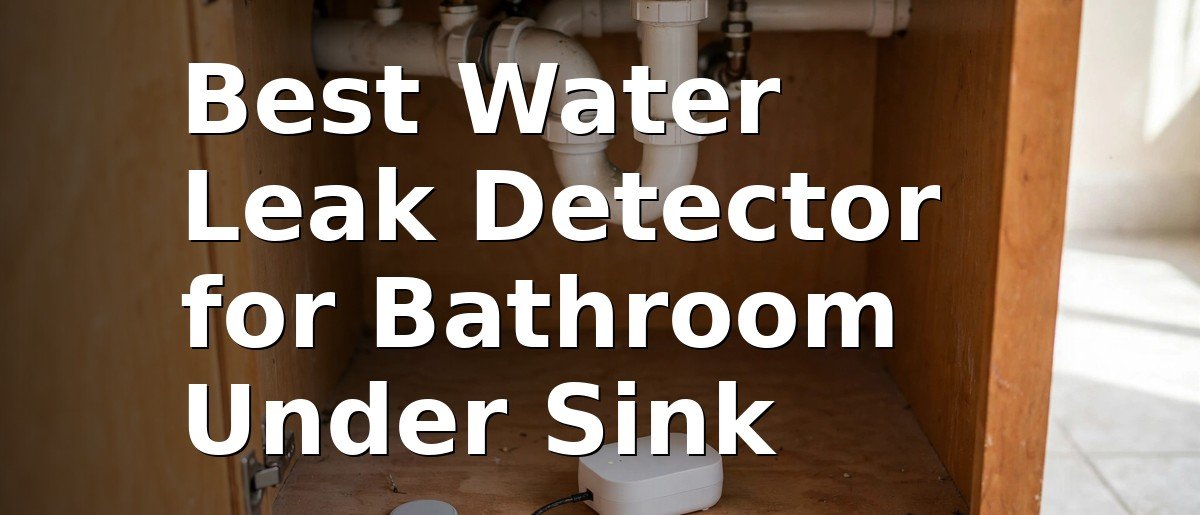
The best water leak detector for bathroom under sink cabinets is a Wi-Fi sensor with a loud alarm and phone alerts, placed on the cabinet floor beneath the P-trap. My Homesblogs recommends a sensor-cable model for cramped cabinets, since the probe reaches the lowest point while the alarm stays dry.
Key Takeaways
- A detector only alerts; it never stops water, so the alarm must be loud and the phone alert must reach you away from home.
- Place the sensor flat on the lowest point of the cabinet floor, under the P-trap and supply hoses, never on a shelf.
- Wi-Fi sensors suit homes where someone is often away; standalone alarms suit flats where someone is usually home.
- A sensor-cable model covers the whole cabinet floor from one unit.
- Test monthly and change the battery when the low-battery beep starts.
What Is a Water Leak Detector?
A water leak detector — also sold as a bathroom leak detector — is a battery-powered device that sounds an alarm, and in smart models sends a phone alert, when its contacts or cable touch water.
Which Is the Best Water Leak Detector for Bathroom Under Sink Use?
Four types cover the under-sink job. A standalone battery alarm is a puck with contacts underneath; water touches them and a siren sounds. A Wi-Fi sensor adds a phone alert, so it warns you at work or on holiday. A sensor-cable detector keeps the alarm on the wall while a cable across the floor senses water along its length. A shutoff-valve system closes the water supply itself, but it needs a plumber and costs far more.
For most bathroom sinks, a Wi-Fi sensor wins because the leak usually starts when nobody is home. Homeowner Basics, in its October 2026 update, picks the GoveeLife 1s kit: three sensors with a 105 dB siren each and a Wi-Fi gateway sending app and email alerts with no subscription, on two AAA cells with up to five years of battery claimed. One kit covers the bathroom sink, kitchen sink and washing machine, so the per-spot cost falls below three standalone alarms.
| Type | Alarm loudness | Power | Price in India* | Source |
|---|---|---|---|---|
| Standalone battery alarm | 90 dB | 9V battery | ₹3,131 for 2 | Mindful Design, via desertcart India |
| Wi-Fi smart sensor | 105 dB | 2 AAA batteries | ₹1,330 | amiciSmart, via Flipkart |
| Sensor-cable detector | 65 dB | 4 AA batteries | — | Bob Vila, Shelly Flood Gen4 test |
| Shutoff-valve kit | — | Mains power | ₹42,677 | FloodStop, via desertcart India |
*November 2026 listings on Indian retail sites; imported models include duties.
Where Should You Place the Sensor Under the Sink?
Put the sensor where water pools first: flat on the lowest point of the cabinet floor, under the P-trap and supply hoses. The homesblogs rule is simple: the sensor sits where water pools first, not where it looks tidy. Measure the cabinet floor before you buy a cable model — the same measure-first habit the Sonotube Concrete Calculator applies to concrete pours.
Keep stored bottles off the sensor, because anything standing on the contacts lifts them off the floor. A shallow drip tray under the P-trap holds the first drips in one place. Move the tray and sensor together when you rearrange the cabinet, and check after every plumber visit that the sensor is still flat on the floor.
How Loud Should the Alarm Be, and How Long Do Batteries Last?
An under-sink alarm must be loud enough to hear through a closed cabinet door. Bob Vila's 2026 testing measured real alarms from 65 dB on the Shelly Flood Gen4 to 100 dB on the Basement Watchdog, with the Kidde model at 95 dB. A 65 dB alarm suits a sensor that also sends phone alerts; a battery-only alarm needs 90 dB or more.
Battery life decides whether the detector still works a year from now. Simple alarms run on a 9V battery that lasts about a year. Wi-Fi sensors run on two AAA cells and claim multi-year life, but the claim assumes the alarm rarely sounds. Change the cells the day the low-battery beep starts, because a silent detector gives false confidence while the cabinet floods.
Do Wi-Fi Leak Detectors Work in a Bathroom?
Yes, when the Wi-Fi signal reaches inside the cabinet. Bathrooms sit behind tiled walls, so test before you commit: close the cabinet door and check that your phone holds a 2.4 GHz Wi-Fi signal there. Most leak sensors use 2.4 GHz, which passes through walls better than 5 GHz. If the signal drops, move the router closer or pick a hub-based sensor whose hub sits outside the bathroom.
A Wi-Fi detector still sounds its local alarm when the network is down. What you lose without Wi-Fi is the phone alert, which is the whole point of a smart sensor when you are away. If your bathroom has no usable signal at all, buy a standalone battery alarm instead.
How Much Does a Water Leak Detector Cost in India?
A single Wi-Fi sensor is the cheapest useful buy. The Indian brand amiciSmart lists its Wi-Fi leakage detector at ₹1,330 on Flipkart, with two AAA batteries and SmartLife app alerts in the box. At that price, covering three spots — bathroom sink, kitchen sink and washing machine — costs about ₹3,990, less than a single bathroom repaint after an under sink leak.
Do not judge a detector by its sticker price alone. A hub adds cost but lets one app watch several sensors, while a sensor that needs a hub you do not own is useless on its own. Buy one sensor first, test it under your sink for a week, then buy the rest once the Wi-Fi reaches and the alarm is loud enough from the next room.
Should You Buy a Shutoff Valve System Instead?
A shutoff system is the only detector that stops water on its own, and it belongs on the main water line. AmazingFlash, in its June 2026 cost guide, puts a whole-house automatic shutoff valve at $200 to $800 for the valve unit plus $150 to $400 for professional installation, with a plumber needing 2 to 4 hours to fit it. That price buys protection for the whole flat while the house is empty, so it earns its price when the flat stays empty for weeks — but for a single bathroom sink, sensors are enough, since you turn the angle valve off by hand in seconds. A shutoff valve needs a plumber, a mains socket nearby, and Wi-Fi at the main line — never cut into the main supply yourself.
When a Detector Will Not Help
A sensor only sees water that reaches the cabinet floor. Seepage inside the wall, a leak from the flat above, or a slow drip behind the tiles can soak plaster for weeks before a drop reaches the sensor, so a detector never replaces checking the wall itself. If paint is already peeling, How to Fix Peeling Paint in Bathroom explains the repair once the leak is found. A detector also does nothing with a dead battery, which is why the monthly test matters more than the brand on the box.
Frequently Asked Questions
Can a water leak detector stop a leak?
No. A detector only alerts you, and you or a shutoff valve must close the water.
Where exactly do I put the sensor under the sink?
Place it flat on the lowest point of the cabinet floor, directly under the P-trap and the supply hoses. Keep bottles off it.
How long do the batteries last?
A 9V battery in a simple alarm lasts about a year, while Wi-Fi sensors on two AAA cells claim several years. Test monthly.
Will a Wi-Fi detector work if my bathroom Wi-Fi is weak?
It sounds its local alarm without Wi-Fi, but the phone alert needs a signal inside the cabinet. Test with your phone first.
Do I need a plumber to install a leak detector?
No. Battery and Wi-Fi sensors need no tools — you place them on the cabinet floor and switch them on. Only a shutoff-valve system needs a plumber.
How often should I test the detector?
Test it monthly with a wet cloth. Replace the battery every year on a fixed date.
Conclusion
The best water leak detector for bathroom under sink cabinets is the one you will hear and the one whose battery you will change: a Wi-Fi sensor for most homes, a sensor-cable model for cramped cabinets, and a plain battery alarm where someone is always home. Put it on the lowest point of the cabinet floor today, test it monthly, and a small drip stays a mop-up, not a repair bill.



Leave a Reply