
On this page
- Key Takeaways
- What Peel-and-Stick Wallpaper Is
- How Do You Prepare a Bathroom Wall for Peel-and-Stick Wallpaper?
- How Do You Measure and Cut the Strips?
- How Do You Apply It Without Bubbles?
- How Do You Handle Seams, Corners and Fixtures?
- How Long Does It Last in a Bathroom — and How Do You Care for It?
- Wall Types at a Glance
- Frequently Asked Questions
- Conclusion
You can paper a bathroom wall in one afternoon: clean and fully dry the wall, cut each strip 5 cm long, hang it plumb from a pencil line, and smooth centre-to-edge as you peel the backing down. Keep it off shower walls and soaking-wet surfaces.
This My Homesblogs guide covers prep, measuring, bubble-free application, seams and trimming — with the bathroom limits stated honestly.
Key Takeaways
- Peel-and-stick suits smooth, clean, dry walls — never damp, flaking or heavily textured ones.
- Newly painted walls need 4 weeks to cure before papering.
- Cut strips 5 cm longer than the wall height; hang from a vertical pencil line.
- Keep it out of shower enclosures and splash zones; ventilated humidity is fine.
- Most bubbles settle or press out within a day or two.
What Peel-and-Stick Wallpaper Is
Peel-and-stick wallpaper is a self-adhesive wall covering: peel the backing off and press the printed face onto the wall. No paste, no water bath, no drying time — which is why it suits renters and first-time DIYers. Most bathroom versions are vinyl or vinyl-coated, so the face wipes clean with a damp cloth.
One distinction matters: this article is about wallpaper for bathroom walls — not peel-and-stick floor tiles, a different product made for floors. Wall paper is thinner and fixed with a lighter adhesive; floor tiles are thicker, rigid and built for foot traffic.
How Do You Prepare a Bathroom Wall for Peel-and-Stick Wallpaper?
Preparation decides whether the paper stays up for years or peels in weeks. Fill cracks and holes, let the filler dry, sand smooth and brush off dust. Wash with all-purpose cleaner, wipe with isopropyl alcohol (70%) to cut grease and soap residue, and finish with a dry cloth. According to the Eazywalls installation guide, this sequence gives the adhesive a surface it can grip.
Let the wall dry completely, ideally overnight. Fresh paint is the biggest trap: Wallpaper Boutique and Tiny Walls both state newly painted walls need a minimum of 4 weeks to cure before papering, since uncured paint will not hold the adhesive. If the wall feels chalky — common on older distemper or putty in South Asian flats — prime it first. If it is damp, stained or flaking, stop: find the leak, dry the wall and treat mould before papering.
How Do You Measure and Cut the Strips?
Measure the wall height at three points and use the longest. Cut each strip about 5 cm longer for trimming at ceiling and skirting. If the paper has a pattern, check the repeat on the roll, line the design up strip to strip, and number each strip’s back in pencil.
Mark your starting line before peeling anything: measure out from the corner by one strip width, minus about 5 mm, and draw a vertical pencil line with a spirit level. That line — not the corner, which is rarely plumb — keeps every strip straight. If the wall includes an arched niche or a curved alcove, an Arch Calculator can work out the curve from the width and height you measure before you cut paper for that section. Order about 10% extra paper.
How Do You Apply It Without Bubbles?
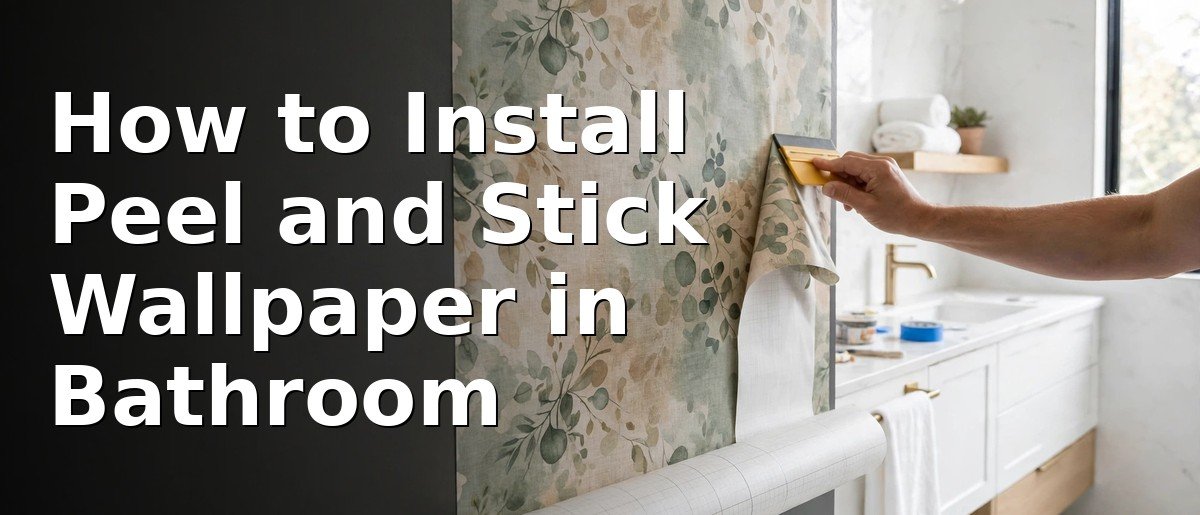
Work one strip at a time, top to bottom; never peel the whole backing off at once. Peel back only the top 20–30 cm, line the strip up against your pencil line with the extra length overlapping the ceiling, and press the top edge lightly into place. Then peel the backing down in short sections — about 30 cm at a time — smoothing with a plastic smoother or a soft cloth over a straight edge.
Always smooth from the centre outward toward the edges, so air is pushed out, and press firmly — light strokes leave air behind. If a strip drifts, peel it gently back and reposition it before pressing hard: the adhesive stays repositionable during hanging, and Huggleberry Hill notes its fabric wallpaper can be repositioned for up to 24 hours after installation. Small bubbles in the first day or two often settle; press the rest toward the nearest edge, or lift and re-lay that section.
How Do You Handle Seams, Corners and Fixtures?
Butt strips edge to edge, with no overlap and no gap, and press each seam firmly with a seam roller or smoother edge. Some patterns hide better with a hairline overlap of about 0.15 mm, but only if the pattern lines up perfectly — a visible double line is worse than a tight butt joint. Check alignment at eye level before pressing seams down hard.
For inside corners, cut the strip to fit and let a few millimetres wrap around; for outside corners, wrap the paper around the corner. Trim excess at ceiling and skirting with a sharp utility knife against a straight edge, changing the blade often — a dull blade drags and tears. Around sockets and switches, switch the power off at the board first, cut a small cross over the fitting, fold the flaps back and trim around the plate.
How Long Does It Last in a Bathroom — and How Do You Care for It?
In a ventilated bathroom, kept off direct water, peel-and-stick wallpaper is a multi-year covering. According to Angi’s guide, updated in July 2026, quality peel-and-stick wallpaper lasts five to seven years or longer on smooth, prepared walls, while humidity, temperature swings and direct sunlight shorten that life. WallPops and Huggleberry Hill approve bathroom use where the paper is not in direct, constant contact with water, and DeccoPrint notes its papers handle medium humidity if the room is ventilated regularly.
Place it wisely: the wall opposite the shower or behind the door suits it; the shower enclosure, the basin splash zone, and any wall that stays wet do not. Run the exhaust fan during and after showers, wipe splashes promptly, and use mild soap only. Press down any lifting corner early — one left lifting through a monsoon collects moisture and fails.
Wall Types at a Glance
| Wall type | Prep needed | Suitability | Source |
|---|---|---|---|
| Smooth painted wall, cured | Clean, dry, sand if glossy | Best | Tiny Walls guide |
| Fresh putty or new paint | Wait full cure, prime if chalky | Good once cured | Wallpaper Boutique |
| Smooth plaster or putty | Fill cracks, sand, prime | Good | Eazywalls guide |
| Flat glazed tile, dry area | Clean, degrease, dry | Good off the shower | Huggleberry Hill |
| Textured or rough plaster | Sand smooth, repaint | Not suitable | Eazywalls guide |
| Damp, flaking, mouldy wall | Fix leak, dry, treat mould | Do not paper | WallPops |
In rented homes, peel-and-stick is often safest, coming off without paste damage — but keep the landlord’s permission in writing and test one strip for a few days before papering the whole wall, a habit homesblogs readers swear by, especially in a small windowless bathroom where steam lingers. Old peeling paint, heavily textured walls and fan-less bathrooms are cases where paint or tile serves better.
Frequently Asked Questions
Can you use peel and stick wallpaper in a bathroom?
Yes, on dry walls away from direct water, in a ventilated bathroom. It handles light and medium humidity, but not shower enclosures or walls that stay wet.
Does peel and stick wallpaper survive monsoon humidity?
Yes, on a well-prepared, dry wall in a ventilated bathroom, especially vinyl-coated designs. Indian makers such as Giffywalls sell peel-and-stick murals for Indian homes through the monsoon.
How long should paint dry before applying peel and stick wallpaper?
At least 4 weeks — fresh paint needs a full cure to hold the adhesive, or it may peel off with the paper later.
Can you put peel and stick wallpaper over tiles?
Yes, on flat glazed tiles in dry areas, cleaned, degreased and fully dry. It grips poorly across deep grout lines and must never go inside the shower.
What do you do about air bubbles after installation?
Small bubbles often settle within a day or two. Press the rest toward the nearest edge, or peel that section back and re-lay it. A pinprick works last but can mark the pattern.
Is peel and stick wallpaper renter-friendly?
Yes — it removes without paste and usually without wall damage if peeled slowly from the top corner.
Conclusion
Prep the wall properly, hang plumb from a pencil line, and keep it out of direct water — and a bathroom wall can look freshly decorated in one afternoon without paste or a professional bill. That is how to install peel and stick wallpaper in bathroom spaces so it stays smooth through daily showers and monsoon months alike.
Leave a Reply