
Flooring & Finishes
Flooring Calculator
Calculate square footage, boxes of flooring and total cost with the right waste for your layout.
Open calculator
Find how many gallons of epoxy you need for a garage or basement floor from the area, the dry film thickness you want and the product’s solids content.
Epoxy coatings are specified by dry film thickness in mils (thousandths of an inch). This calculator converts the thickness you want into gallons, allowing for the fact that part of any coating that is not 100% solids evaporates as it cures.
One US gallon spread 1 mil thick covers 1,604 sq ft. Dividing that coverage by your target thickness and adjusting for solids gives coverage per gallon; the tool then multiplies by area and coats and adds waste. Planning the rest of the room? The Flooring Calculator handles tile and plank floors.
In plain terms, here is the calculation the tool runs:
A 400 sq ft garage, two coats of 100% solids epoxy at 10 mils, 10% waste.
Buy about 5.5 gallons — four 1.5-gallon kits.
It is the share of the liquid that stays on the floor after curing. A 50% solids product applied 20 mils wet leaves a 10 mil film.
A total of 15–25 mils across primer and topcoat is common for residential garages. Heavier traffic warrants more.
Flakes do not add much volume, but a clear topcoat over a full flake broadcast needs roughly 20% more material.

Last updated: October 26, 2026 Here is how to clean grout in bathroom tiles: spread a baking soda and hydrogen peroxide paste on the lines, wait 15 to 20 minutes, scrub along each joint,…

Last updated: October 24, 2026 The best grout sealer for bathroom shower floor grout is a penetrating sealer: it soaks into the cement pores and blocks water without changing how the grout looks. This…
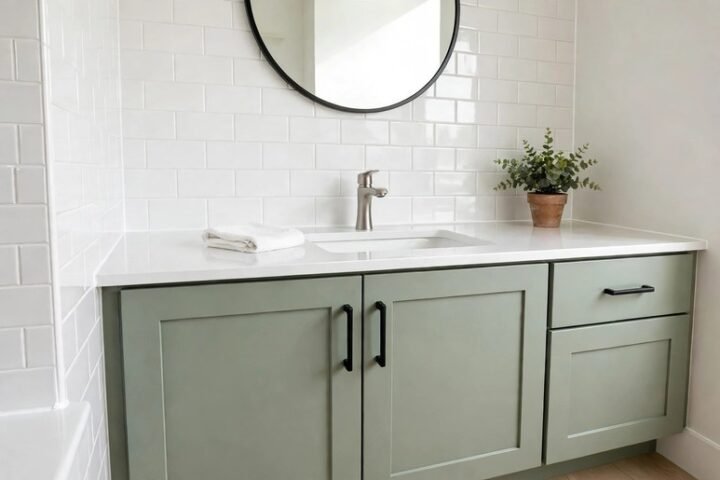
Last updated: October 22, 2026 You can update a bathroom cheap without replacing tile by reglazing tile, refreshing grout, repainting the vanity, and swapping fixtures. This My Homesblogs guide orders each step by visible…