
On this page
- Key Takeaways
- Why Does a Bathroom Sink Drain Slowly?
- How Do You Find the Blockage Before You Start?
- How Do You Clean the Pop-Up Stopper and Waste?
- How Do You Plunge a Bathroom Sink Correctly?
- How Do You Clean the Trap and Snake Deeper Blockages?
- What Should You Never Pour Down a Slow Drain?
- Frequently Asked Questions
- Conclusion
Most slow bathroom sinks clear without a plumber: clean hair and soap scum off the pop-up stopper, plunge with the overflow sealed, then rinse the bottle trap. If water still drains slowly, feed a hand snake down the line — and call a plumber if other fixtures slow too.
This My Homesblogs guide works gentlest-first: easiest fix first.
Key Takeaways
- One slow basin usually means a local blockage.
- Clean the stopper first: most blockages sit centimetres from the drain.
- A plunger needs a sealed overflow and a water-covered cup.
- Opening a trap? Bucket underneath, washers kept in order.
- Never mix chemical cleaners; never plunge after pouring one in.
Why Does a Bathroom Sink Drain Slowly?
A basin drains slowly because daily waste does not all wash away. Hair catches on the pop-up stopper and waste crossbars, each strand snagging the next until a mat forms. Soap and toothpaste add a sticky film that glues it together; in hard-water areas it thickens into scale.
South Asian water makes this worse: borewell and tanker water is often much harder than municipal supply. BIS specification IS 10500:2012 sets the acceptable total-hardness limit at 200 mg/L (600 mg/L only where no alternative source exists), and a 2026 Indian hard-water guide notes borewell and tanker water gives the hardest readings.
How Do You Find the Blockage Before You Start?
Two checks decide if this is a do-it-yourself job. Run the tap: if water pools but drains steadily, the blockage is partial and close by. If it does not move at all, skip chemical cleaners — a cleaner poured onto a standing blockage just sits against the pipe.
Then check the other fixtures. If only the basin is slow, the blockage is local, the kind of fault homesblogs readers most often fix themselves. If several fixtures are slow, or water rises in the shower when the basin drains, stop — the blockage is deeper, a plumber’s job.
How Do You Clean the Pop-Up Stopper and Waste?
This step solves the problem most often. Put on rubber gloves. Lift the pop-up stopper — most South Asian basin wastes lift straight out or unscrew anticlockwise — and pull the hair and scum off its stem. If yours works by a lever rod, squeeze the spring clip, slide the pivot rod out, and lift the stopper free; note how the rod sat.
Wipe the scum ring inside the waste opening with an old toothbrush, then run the tap for 30 seconds. If water now drains at full speed, you are done.
How Do You Plunge a Bathroom Sink Correctly?
Use a small cup plunger, not a toilet plunger. First seal the overflow hole with a wet cloth pressed firmly in place — without it, each push just blows air out of the overflow. Run the tap until 3–4 cm of water covers the cup.
Set the cup over the drain and pump vigorously for 20–30 seconds, about 15–20 strokes. Lift sharply on the last stroke, then check. Repeat up to three times. If the water drops with a gurgle, follow with 2–3 litres of hot tap water — around 60°C, not boiling. Boiling water can soften plastic trap joints and warp seals. If plunging fails, check the usual causes: an unsealed overflow, too little water, or a cup too small for the drain.
How Do You Clean the Trap and Snake Deeper Blockages?
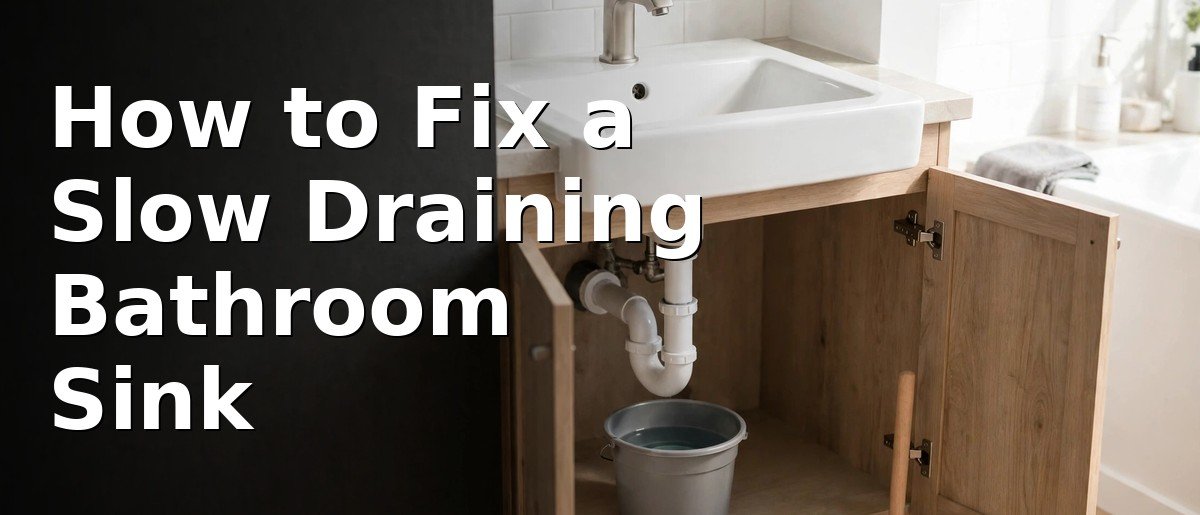
If stopper and plunger have not fixed it, the blockage is in the trap — the bend under the basin that holds water to block drain smells. Most modern South Asian basins use a bottle trap; older fittings use a curved P-trap. Clear the cabinet and slide a bucket under the trap.
For a bottle trap, unscrew the bottom cup by hand, empty it into the bucket, and wipe cup and dip tube clean. For a P-trap, loosen the two slip nuts by hand, or with pliers if stiff, and lower the bend into the bucket. Keep washers in order — one refitted wrongly is the commonest cause of a later drip. Rinse, check for cracks, refit hand-tight plus a quarter turn, and run the tap for a minute, checking joints.
If the trap was clear but the basin is still slow, the blockage is further down the wall pipe. Feed a hand drain snake into the open wall pipe with the trap off. Push gently and crank clockwise; at resistance, keep cranking so the tip bites in, then pull back and push again. Feed no more than about 3 metres: basin branch lines are short. Pull the cable out slowly, wipe it, refit the trap, and test.
If a slip nut will not move, do not force it: old chrome traps seize and crack. Penetrating oil and 15 minutes of waiting beat a broken fitting. If trap or wall pipe shows heavy rust or pinhole leaks, stop and call a plumber.
What Should You Never Pour Down a Slow Drain?
Chemical cleaners deserve a hard rule: one product, once, as the label says — never on a fully blocked drain. The danger is mixing: EngineerFix warns that a bleach-based cleaner plus an acid-based one can release chlorine gas, a severe hazard in a small bathroom.
Second, never plunge after pouring a cleaner in — it splashes back at you — so wear gloves and eye protection, and tell your plumber what went down the drain if a cleaner fails.
| Method | Best for | Time needed | Cost band | Source |
|---|---|---|---|---|
| Stopper cleaning | Surface hair and scum | 10 minutes | No parts cost | Jaquar guidance |
| Cup plunger | Soft blockage | 15 minutes | ₹150–₹300 | Trade guides |
| Trap cleaning | Blockage in the bend | 30 minutes | Bucket and towel only | Lipka guidance |
| Hand drain snake | Blockage 1–3 metres down | 45 minutes | ₹400–₹900 | Trade guides |
| Hot-water flush | Leftover soap film | 20 minutes | Under ₹50 | BIS IS 10500:2012 |
| Plumber visit | Several fixtures slow | 60–90 minutes | ₹800–₹2,000 | UdaipurTimes guide, October 2026 |
In rented homes, check with the landlord before replacing any fitting — stopper cleaning, plunging, and emptying a bottle trap are normal tenant maintenance, but swapping a trap is not. Very old galvanised pipes need a gentler hand: stop if the snake meets gritty resistance or rust flakes. Vessel basins hold more hair in a taller waste; wall-hung basins leave little room. If the same renovation also includes an arched niche or an arched mirror frame above the basin, an Arch Calculator can work out the curve from the width and height you measure before you order glass or tiles. If your basin has no overflow hole, skip the plunger and go straight to the trap.
Frequently Asked Questions
Why does my bathroom sink drain slowly but the bath drains fine?
Because the blockage is local to the basin’s stopper, waste, and trap — not the bath’s branch.
Can I use boiling water to clear a slow basin drain?
No. Boiling water can soften plastic waste pipes and trap seals. Use hot tap water at around 60°C instead.
How often should I clean the pop-up stopper?
Every four to six weeks in a hard-water home; more often where several people share one basin. A two-minute wipe prevents the mat.
Is a chemical drain cleaner safe for my basin?
It can be, used exactly as the label says, once, on a drain that still moves water. Never mix cleaners, never add bleach to a drain holding a cleaner, and never plunge after pouring one in.
My sink drains slowly again a week after clearing it. Why?
Either the blockage was only partly cleared, or a deeper partial blockage — pipe-wall scale or a roof vent blocked by monsoon debris — is catching debris again. Snake once more; if it returns, have a plumber inspect the line.
Should I replace the bottle trap or just clean it?
Clean it first. Replace it only if the cup is cracked, threads stripped, seals perished, or body corroded. Match the existing size — most Indian basin wastes use a 32 mm connection — and keep the old washers for comparison.
Conclusion
A slow basin is rarely a mystery or an emergency: work from the stopper inward, seal the overflow while you plunge, and open the trap before reaching for anything stronger. That is how to fix a slow draining bathroom sink without damaging fittings or flooding the cabinet — and if several fixtures slow together, or the blockage returns twice, hand the job to a plumber.



Leave a Reply